

Richard Ramirez attacked people across Southern California from 1984 to 1985, usually after entering homes at night. A Los Angeles jury later convicted him of 13 murders, five attempted murders, 11 sexual assaults, and 14 burglaries. DNA linked him to another 1984 killing years after the trial.
The press called the unknown attacker The Night Stalker. The name became part of the public story, but the case turned on surviving witnesses, a stolen car, a partial license plate, footwear impressions, and a fingerprint that gave investigators a name.
Ramirez received a death sentence in 1989. He died from complications of B-cell lymphoma in 2013, before an execution was carried out. The timeline below follows the crimes, investigation, arrest, trial, and later prison record without treating rumor as evidence.
Richard Ramirez's Early Life
Richard Ramirez, born Ricardo Leyva Munoz Ramirez, came into the world February 29, 1960, however, the distinction of being born on Leap Day did not bring him much luck. Ramirez was the youngest of five children. His father, a one time Juarez police officer, worked as a laborer for the Santa Fe Railroad. Richard’s father was reportedly an angry man who was prone to fits of rage and physical violence which he often directed towards his family.

Biographical accounts describe two childhood head injuries and later seizures. They also describe violence inside the family home. Those details belong in a biography, but they do not prove a simple medical cause for the crimes Ramirez committed as an adult.
Making a Serial Killer
By the time Ramirez was twelve, he had begun spending a lot of time with his cousin Miguel. Miguel was a violent Vietnam vet who enjoyed sharing stories of his gruesome exploits during the war with his young cousin. Miguel took sadistic pleasure in showing a young, impressionable Ramirez how to kill with stealth and skill. Ramirez had been an avid pot smoker since the age of 10.
He suffered epileptic seizures since the swing incident when he was 6. His impressional age, addiction, and medical condition made him susceptible to his cousin's influence. It was about this time Ramirez began sleeping in a local cemetery to escape his angry father’s violence.
At the age of 13, Richard Ramirez witnessed his cousin Miguel shooting his wife in the middle of an argument. This act left Ramirez sullen and depressed, according to family members. Later in 1973, Ramirez moved in with his sister, Ruth. Ruth’s husband was a notorious peeping tom who taught a young and impressionable Ramirez the fine art of watching people through their windows.
Accounts of this period describe drug use, burglary, voyeurism, and an interest in Satanic imagery. None of those details, alone or together, explains murder. Ramirez made a series of adult choices, and the criminal case was based on what he did, not on a pop-psychology formula about his childhood.
The Night Stalker Kills
Richard Ramirez committed his first murder in the Tenderloin District of San Francisco. A nine-year-old, Mei Leung, was discovered in the basement of the hotel Ramirez was living in during 1984. She had been raped, beaten and stabbed. Her body was found hanging from a pipe in the basement area of the hotel. While this is Richard Ramirez’s first crime, he did not receive any credit for his first kill until 2009 when DNA from the crime scene was matched to Ramirez.
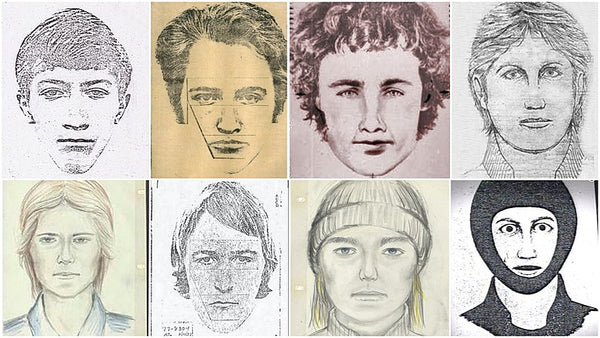
Original suspect sketches of The Night Stalker
The crimes Richard Ramirez committed during what is known as the era of the Night Stalker began June 28, 1984. Jennie Vincow, a 79-year old resident of Glassell Park, was found brutally stabbed to death. The attack happened while the woman slept. Her neck was cut so deep, she was almost decapitated. Ramirez was linked to the crime thanks to fingerprints found on the window screen he cut to gain access to Jennie Vincow’s apartment.
Read Next: The 14 most famous serial killers of all time
The next Night Stalker crime occurred on March 17, 1985. Richard Ramirez shot 22-year old Maria Hernandez in the face as she pulled into the garage of her Rosemead home. She survived the shooting thanks to the keys she had in the hand she held up to defend herself from Ramirez’s attack. Her roommate did not fare so well. Dayle Okazaki hid behind the kitchen counter when she heard the gunshot that wounded Maria Hernandez. Ramirez shot her in the face as she peeked out from her hiding place. She did not survive the attack.
Something about the attack on Hernandez and the murder of Okazaki set Ramirez off. He attacked another woman within hours of the Rosemead attacks. Tsai-Lian “Veronica” Yu was forcefully removed from her vehicle at the hands of a crazed Ramirez. She was shot twice with a 22 caliber handgun. Although she was rushed to the hospital, she did not survive the attack. Three attacks that led to two murders in one day gained Richard Ramirez media attention. At this point, he was known for rotting teeth and bulging eyes. He gained his first nicknames from the press: The Valley Killer and The Walk-in Killer.
Ramirez Kills Again
Within days, Richard Ramirez’s insatiable appetite for violence drove him to commit more murders. On March 27, Ramirez broke into the home of Vincent Zazzarra. It was in the Zazzara home where Ramirez perfected his killing style. The 64-year-old husband was murdered first, killed by a gunshot wound. His wife, Maxine, was then brutally assaulted and stabbed to death. Ramirez then gouged out her eyes and placed them in a jewelry box he found while robbing the couple’s home.
The autopsy of Maxine revealed many of her stab wounds occurred after she had died. The killing of the husband and then assaulting the wife before brutally murdering her became Ramirez’s standard killing pattern. This attack also left the first real clue to assist police at the beginning of the hunt. In the flowerbed outside the Zazzarra home, a shoe print from a pair of Avia sneakers was found, photographed and a cast was taken off the print. This wasn’t much evidence, but it was a place to start.

After killing the Zazzarra couple, Ramirez was at it again, this time in Monterey Park. On May 14, 1985, Ramirez entered the Doi home. Bill Doi and his disabled wife were tortured and assaulted by Ramirez. Bill Doi died of his injuries while in the hospital. Lillian was bound while Ramirez ransacked their home. Ramirez then assaulted and raped the poor woman.
A short 15 days later, Ramirez continued his reign of terror. In Monrovia, Ramirez entered the home of sisters, 83-year-old Mabel “Ma” Bell and 81-year-old Florence “Nettie” Long. Ramirez attacked both women with a hammer he found in the home. He used an electrical cord to shock and torture Bell. He bound and raped Nettie Long and then used Bell’s lipstick to draw a pentagram on her leg and the walls of her bedroom. Age was not a consideration for Ramirez. Both women were comatose at the time they were finally discovered. Mabel “Ma” Bell died as a result of the attack.
The Night Stalker Kills In Burbank
The Night Stalker’s reign of horror continued unchecked. Ramirez's next victim was 42-year old Carole King of Burbank. Carole’s 11-year-old son was home at the time of the break-in and assault. Both mother and son were handcuffed while Ramirez searched the house for valuables. After his search proved fruitless, he released Carole Kyle and forced her to show him where the valuables were hidden. He then repeatedly raped Carole, telling her not to look at him or he will cut her eyes out. Both mother and son survived the attack. Ramirez fled the home after binding them together.
Richard Ramirez’s terror knew no bounds, geographically or otherwise. He killed in Arcadia, Sierra Madre and again in Monterey Park. In Sierra Madre, Ramirez entered the home of 16-year-old Whitney Bennett. After beating the girl with a tire iron, he searched in vain for a knife. When the search proved fruitless, he strangled the girl with a telephone cord. The telephone cord started to emit sparks while Whitney Bennett began breathing. This scared the satanist so much as he thought it was a sign from God. He fled the home.
Bennett was lucky enough to survive the attack although she required more than 400 stitches to close her wounds. Not long after the Sierra Madre attack, Ramirez broke into the home of 61-year old Joyce Lucille Nelson. He beat her to death with his fists and then kicked her in the head, leaving behind another Avia sneaker print on the poor woman’s face. Evidently, Ramirez didn’t spend a lot of time thinking about evidence left behind during his killings.

At the beginning of August of 1986, Ramirez committed two more attacks in rapid succession. In Northridge, he entered the home of Chris and Virginia Peterson. He shot Virginia. Chris ended up shot multiple times as he fought off Ramirez. Both Petersons were lucky enough to survive the attack. A mere two days later, Ramirez broke into the Aboweth home in Diamond Bar, California.
He almost immediately shot the husband in his sleep. He brutally attacked Sakina Aboweth, raping her and demanding she “swear on Satan” that she would not scream. The couples' three-year-old child woke up during the attack. Ramirez tied the boy up and continued raping his mother. After Ramirez finished his brutal attack and fled the home, Sakina untied her son and sent him to a neighbors house for help. Both mother and son survived the attack.
More Los Angeles Killings
The Night Stalker’s reign of terror continued throughout the Los Angeles area. By the middle of August of 1985, Ramirez had seen news coverage of his crimes and knew he was being hunted. In a poor attempt to evade the investigation, Ramirez left the Los Angeles area and fled to San Francisco. At the home of Barbara and Peter Pan, Ramirez continued exacting horror on his unsuspecting victims. As per his usual style, he shot Peter in the head before attacking, raping, and murdering Barbara.
Before leaving the Pan home, Richard Ramirez used Barbara’s lipstick to scrawl a pentagram on the wall as well as the phrase “Jack the Knife”. After watching a press conference detailing the evidence, Ramirez dropped his Avia sneakers over the side of the Golden Gate Bridge, destroying an important piece of evidence. Detectives were furious about the press conference and the discussion of the evidence for this very reason.

Perhaps the news coverage rattled Ramirez’s nerves and caused him to get sloppy or maybe he was exhausted from the pace at which he was committing his atrocious crimes. Either way, Richard Ramirez began to take bigger risks which left behind more evidence and allowed more opportunity for capture. On August 24, 1985, Ramirez attempted to enter the Ramero home in Mission Viejo. The Ramero family had just returned from vacation.
The family’s 13-year-old son happened to be awake when Ramirez began attempting to gain entry to the house. He was able to scare the brave Night Stalker off while gathering valuable evidence. Thanks to young Ramero’s quick thinking, police had the color, model and make of the vehicle Ramirez was driving as well as a partial license plate number. The boy was under the impression he had chased away a regular, not-at-all sadistic thief. In reality, his actions probably saved his family’s lives.
After the near miss in Mission Viejo, Ramirez committed his final break-in and attack. At the home of Bill Cams and Inez Erickson, Richard Ramirez once again followed his usual routine of shooting the male resident first, then attacking the female resident. Ramirez announced to Inez that he was the Night Stalker, further terrifying the poor woman. He made her swear on Satan before beating her and raping her.
He stole what valuables he could find, told Inez to “tell them the night stalker was here” and fled the home. Inez was able to get free and find help for Bill Cams. Both victims survived their encounter with the Night Stalker. By allowing both victims to survive, Ramirez unknowingly aided in the investigation surrounding him. Inez was able to describe her assailant, helping detectives to form a better picture of the identity of the Night Stalker.
How investigators identified Richard Ramirez

A period fingerprint terminal illustrates the database search that turned a latent print into a suspect’s name.
The identification did not come from a single dramatic clue. Detectives first had to decide which attacks belonged to the same offender. The victims varied widely in age, and the crimes crossed city and county lines. Surviving witnesses described the attacker. Investigators compared entry methods, stolen property, firearms, shoe impressions, and statements made during the attacks. That combined record helped connect cases that had initially looked separate.
A rare pair of Avia shoes became an important link. Investigators documented prints at more than one scene and learned that relatively few pairs in the matching size and color had been sold in the United States. The print could connect scenes, but it could not name the person wearing the shoes. Public discussion of that evidence also carried a cost. After details reached the news, Ramirez reportedly discarded the shoes near the Golden Gate Bridge.
The break that produced a name came from a stolen Toyota found in Los Angeles. A latent fingerprint remained on the rearview mirror. According to contemporaneous accounts, technicians entered the print into California’s new automated fingerprint system. The computer returned a short candidate list, and an examiner confirmed a match to Richard Ramirez, whose prints were already on file from an earlier arrest.
That sequence is worth spelling out. The computer did not solve the case on its own. It searched stored prints faster than a person could search cards by hand. A trained examiner still had to compare the candidate print with the latent print from the vehicle. The result let investigators connect a physical trace from the car to a known person and pull his booking photograph.
Police released Ramirez’s name and photograph on August 30, 1985. He was outside California at the time. When he returned to Los Angeles by bus the next morning, residents recognized him from newspaper and television coverage. Ramirez ran through East Los Angeles and tried to take several cars. A group of residents stopped and held him until police arrived.
The public capture gets most of the attention, but the evidence chain before it is the more useful lesson. Witness descriptions helped build a picture. The stolen vehicle gave investigators a print. The fingerprint system narrowed the search. An examiner confirmed the match. Only then did the public photograph make recognition possible. Readers can compare this case with the shorter entry in our list of notorious California serial killers.
Identification was also separate from proof at trial. Prosecutors still had to present witnesses, physical evidence, and records for each charged offense. That difference between finding a suspect and proving charges is central to the criminal justice process.
Why the fingerprint match changed the investigation
Before the match, investigators had a linked series and a growing collection of clues, but no confirmed suspect they could put on a wanted poster. A face described by witnesses can point police in a direction. A shoe print can connect two scenes. A partial plate can narrow a vehicle search. None of those facts alone supplied the name Richard Ramirez.
The fingerprint changed the kind of work detectives could do. Once an examiner confirmed the result, police could compare the booking photograph with witness descriptions, look for known addresses and relatives, and warn other agencies. They could also release a specific image to the public. That public step was unusually effective because Ramirez returned to a city where his face had just appeared across the news.
The sequence also shows why the word “match” needs context. A latent print lifted from a used vehicle is evidence, not a complete account of who touched it or when. Investigators still had to establish that Ramirez had used the stolen car and connect him to the charged attacks. The trial record did that through the fingerprint plus survivor identifications, property, weapons evidence, and testimony across the separate cases.
Later retellings sometimes compress the investigation into a computer instantly naming the killer. The 1985 system was impressive for its time, but the final comparison remained human work. The database produced candidates. An examiner confirmed the ridge details. Detectives then used that lead inside a much larger investigation.
That distinction matters beyond this case. Fingerprint systems help sort possibilities; they do not replace collection, documentation, examination, or testimony. In the Ramirez investigation, the technology was valuable because the latent print had been recovered from the right vehicle, preserved, searched, and then checked by an examiner who could explain the result.
Without the earlier witness work and vehicle search, there would have been no useful print to search. Without confirmation, there would have been no responsible basis for naming a suspect.
Capturing the Night Stalker
Along with the description of Ramirez provided by Inez Erickson, a single fingerprint was found on the vehicle stolen by Ramirez in Wilshire Center. These two critical pieces of evidence were added to a cast of Ramirez’s Avia sneaker prints. The fingerprint was enough to give police the rap sheet for a 25-year-old, drug addicted drifter known as Richard Munoz Ramirez. Detectives held a press conference where a mug shot of Ramirez was released to the public. Detectives made it clear they were on to Ramirez by saying during the press conference, “We know who you are now, and soon everyone else will. There will be no place you can hide.” Time was running out for Ramirez. He was getting sloppy and the police now had a clear target.
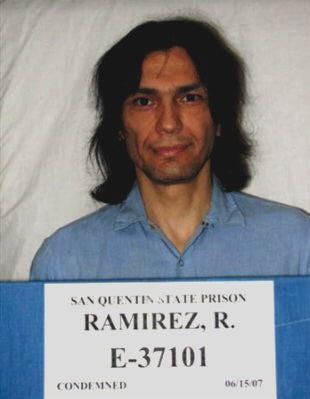
Detectives had enough insight to stake out local bus stations in hopes of catching Richard Ramirez Night Stalker attempting to flee the area. Ramirez had returned from a quick trip to see his brother in Texas. Realizing he had been spotted by police, the courageous Night Stalker hid behind an elderly Hispanic woman, declaring himself “the matador” or the killer in Spanish. He then fled, attempting to carjack two different people in the process. Eventually, a crowd of bystanders surrounded him, beat him, and held him until police arrived to arrest him. The Night Stalker’s reign of terror had finally, mercifully ended.
The Richard Ramirez Trial
Richard Ramirez went out of his way to bring chaos to the court proceedings for his trial. When jury selection began on July 22, 1988, Ramirez showed up to court with a pentagram drawn on his hand and yelled “Hail Satan” into the crowded courtroom. Not long after, Ramirez had been reportedly planning to smuggle a gun into the courtroom with intentions of killing the prosecutor, as reported by the Los Angeles Times.
*Want us to keep writing awesome true crime articles like this? Support us by checking out our limited edition true crime and horror shirts!*
After that, a metal detector was installed at the entrance of the courtroom. In another strange turn of events, juror Phyllis Singletary was found dead in her apartment, a victim of an apparent gunshot wound as part of a murder-suicide at the hands of her boyfriend. While Ramirez had nothing to do with the murder, the jury was nonetheless terrified as a result.
In the most expensive trial in California’s history at the time, Richard Ramirez Night Stalker was convicted of 13 counts of murder, 5 counts of attempted murder, 14 counts of burglary, and 11 counts of sexual assault. He was sentenced to die in the gas chamber on November 7, 1989. In one of the more famous Richard Ramirez quotes, he stated on his way out of the courtroom after receiving his death sentence, “Big deal. Death always went with the territory. See you in Disneyland”. The Night Stalker trial cost California taxpayers more than $1.8 million dollars. This record-setting cost was only surpassed by the OJ Simpson trial years later.
The Night Stalker Finds Love
After his arrest and sentencing, Ramirez did not spend his time in prison lonely. Women who suffered from the affliction known as hybristophillia bombarded the big-eyed, skeletal-looking man with attention. Women who found themselves attracted to serial killers lined up for the chance to love the Night Stalker. One woman, Doreen Loy, began writing Ramirez as early as 1985, right after his arrest. She wrote him more than 75 letters.
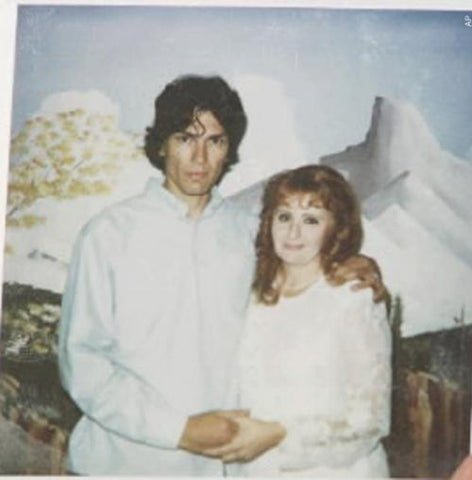
The couple became engaged in 1988 and married at San Quentin in 1996. Lioy defended Ramirez publicly for years. Reports later described the couple as estranged. Her private reasons and later life are not part of the criminal record.
Richard Ramirez Teeth
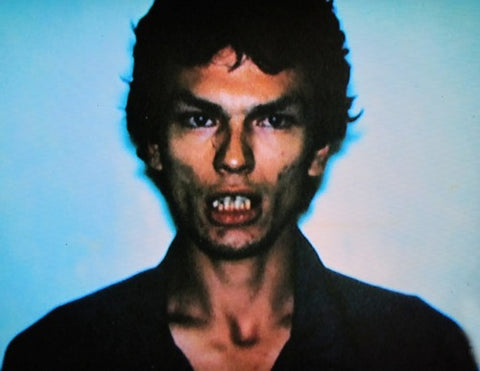
Richard Ramirez benefited from his lengthy prison stay in other ways as well. Ramirez’s years of drug use and dangerous living took a toll on his dental health. Richard Ramirez teeth were just as gruesome as the crimes he committed. Not long after his arrest, the taxpayers of the state of California paid to have his rotting, decayed teeth replaced. While his dental health improved, the new teeth did little to change the skeletal appearance of Ramirez.
Richard Ramirez Quotes

Like all serial killers, Ramirez had a lot to say. Most of it doesn’t make a lot of sense. But, serial killer quotes offer an insight into the mind of these twisted individuals. Here are some of the more remarkable Ramirez quotes.
- “You don't understand me. You are not expected to. You are not capable. I am beyond your experience. I am beyond good and evil. I will be avenged. Lucifer dwells in all of us...I don't believe in the hypocritical, moralistic dogma of this so-called civilized society...You maggots make me sick! Hypocrites one and all...I don't need to hear all of society's rationalizations. I've heard them all before...legions of the night, night breed, repeat not the errors of the night prowler and show no mercy.”
- “You don't understand me. You are not expected to. You are not capable of it. I am beyond your experience.”
- “I love to kill people. I love to watch them die. I would shoot them in the head and they would wiggle and squirm all over the place, and then just stop. Or I would cut them with a knife and watch their faces turn real white. I love all that blood.”
- “We are all evil in some form or another, are we not?”
- “Even psychopaths have emotions. Then again, maybe not.”
Richard Ramirez Death
Richard Ramirez never entered the execution chamber. He died at age 53 in 2013 from complications of B-cell lymphoma after more than two decades under a death sentence. California’s appellate process had not produced an execution date.
Richard Ramirez Movies
Serial killer stories make good movies. There were a few decent ones made telling the story of the Night Stalker. 2002’s Night Stalker stars Bret Roberts as Ramirez himself. Most recently, 2016’s The Night Stalker stars Lou Diamond Phillips as Ramirez. Both offer an interesting insight into the mind of the Night Stalker.
What the case left behind
The charged series ran from 1984 to August 1985 and left victims across Southern California. The 1989 verdict covered 13 murders, five attempted murders, 11 sexual assaults, and 14 burglaries. Later DNA work linked Ramirez to the 1984 killing of Mei Leung in San Francisco, but he was not tried for that crime before his death.
The case is still studied because it joined old-fashioned witness work with an early automated fingerprint search. It also shows the limits of a nickname. “Night Stalker” made the danger easy to describe on television, while the conviction required proof tied to individual homes, survivors, and victims.
Sources
- FBI Law Enforcement Bulletin, March 1986
- Los Angeles Times report on the Ramirez verdict
- UPI report on the identification and arrest
Images from wikimedia commons and allthingscrimeblog in the original Serial Killer Shop article archive.
More True Crime:
Everything You Need To Know About John Wayne Gacy
Carl Panzram: America's Most Repulsive Serial Killer
Shop:
Limited Edition Serial Killer Shirts





8 comments
some guy
How ironic that Richard/Rick claimed that his enemies are hypocrites when it was really him who was a hypocrite. Such a big fat lair he was. I wish that those police let his foes beat him to death. It serves him right for the self-righteous an’ murderous bastard he is.
Ed Hale
Why was this awful man not put to death in over 24 years on death row?
Chey568
I am a criminal justice major. This is the first time I have seen this site and I am glad I found it. I have studied serial killers since the age of 13. They fascinate me because I wonder what their brain scans can tell us. I am also interested in cold cases and would like to write a book about those type of cases. I find the information on here very accurate and I have learned a few things. Thanks for having a site like this.
Peace
It’s crazy how no one mentions the kids he raped. Honestly, this is the worst thing for me. He literally raped an 8 year old boy in front of his mother. I can’t imagine how this man feels today. Probably dealing with a lot of trauma, truly breaks my heart.
That man is a whole pedophile.
Yael
Why no more interviews with richard ramirez in prison before he died???
Jim Goodman
At the time of Ramirez’s rampage, I lived on the street called Ferrocarril in Mission Viejo which intersects with Chrisanta Drive. I was working as a carpenter at the time, and I shared a house with a young couple who had an elementary school-age daughter. I was business partners with a good friend who livedin San Clemente, who had a wife and 3 young kids and I remember how worried she was about the Nightstalker. In mid to late August of 1985, we had a job in Palm Springs which required us to spend several nights there. I remember how it was oppressively hot in the LA area, and I remember my partner’s wife locking all their windows shut, out of fear, despite not having air conditioning. We got home from Palm Springs on the afternoon of August 25th. My housemates had told me that they were going to Anaheim after work and taking their young daughter to Disneyland for some fun. They stayed to see the fireworks and arrived back home around midnight. The next morning I got up around 6:00 to go to work. I went out to get in my truck and saw police tape at the end of the street, and all sorts of activity. I walked down to the end of the street and was told that the Nightstalker had broken in and attacked our neighbors, whom I did not know, but turned out to be Bill Carnes and Inez Erickson. Our house was the second from the corner on Ferrocarril, and Bill Carnes’ house was either the corner house or the house next to the corner house on Chrisanta, I don’t remember which. We were 2 or 3 houses away from the Nightstalker! It could easily have been us! I shudder to think what could have happened if Ramirez watched my housemates enter the house with their little girl following their trip to Disneyland. To this day, I still get chills thinking about how close I and my housemates came to being a victim of this maniac.
Denise
Let’s not forget that he molested a few children and then we’ll let them go. This man is evil.
Chris Thompson
I remember those Night Stalker days. I lived in Southern California around Los Angeles and made sure I walked my dates to their doors, telling them to make sure all their windows and doors were locked and to call the police if they heard or saw anything suspicious. It seemed everyone was paranoid, with good reason, that they could become the next victim of the Night Stalker.Everyone was talking about it. Shortly after the Police identified the Night Stalker as Richard Ramirez, the paranoia began to hit closer to home. An acquaintance at work, a tall, black, but very light skinned, skinny fellow, was accused of being the Night Stalker by some passengers on a bus. When he got to work, he looked like he had just seen death. He said he almost got his “a** beat” by irate accusers, but managed to use his ID to convince the angry mob that he was not Richard Ramirez. It seemed, in no time at all, Richard Ramirez was indeed captured by citizens as he was looking at a newspaper vending machine…and saw his picture on the front page of the LA Times…the exact same time he heard someone scream, “There he is! It’s the Night Stalker!!” There was nowhere to run for Richard Ramirez. There was a collective “sigh” for everyone around here, after that.