

California has been linked to several of the country's most heavily reported serial murder cases. This list looks at seven offenders or teams whose crimes were prosecuted in the state, then checks what happened after conviction. Some shared nicknames, and several older case summaries now need updated prison or death records.

1. William G. Bonin, the “Freeway Killer.”
In 1979, the mutilated body of a 13-year-old boy was found in Agoura, in Los Angeles County. The boy was wearing only a t-shirt, socks, and shoes. He had been cut and stabbed in multiple places and strangled.
His genitals, which had been cut off, were found in a nearby field. Over the course of 1979 and 1980, Vietnam veteran Bonin went on to rape, torture, and kill at least 21 boys and young men, dumping the bodies near high-traffic roads and earning his nickname.
A tip from an arrested car thief led police to Bonin. He was convicted of 10 murders in Los Angeles and four more in Orange County. He was executed by lethal injection at San Quentin State Prison in 1996.
(Although Bonin was the most notorious of the three, two other men, Patrick Kearney and Randy Steven Kraft, shared the name “The Freeway Killer.” The three men were not connected.)
2. Charles Ng.
“You can cry and stuff like the rest of them, but it won’t do you any good. We’re pretty cold-hearted.” So said Hong-Kong-born Charles Ng, who, with his accomplice Leonard Lake, killed at least 11 people and possibly as many as 25 at a rented a cabin in the foothills of the Sierra Nevada.
By the time police discovered burned bone fragments and victims’ belongings, Ng had fled to Canada. Canadian authorities extradited him, and a California jury convicted him of 11 murders. He received a death sentence. The sentence is the durable fact; California has changed where people under death sentences are housed.
3. Juan Corona, “The Machete Murderer.”
In 1971, the body of a migrant farm laborer was found in a shallow grave in a peach orchard. This led to the discovery of more workers’ bodies and clues that trailed back to Corona, who ran a business hiring out farm hands. He was convicted of hacking 25 laborers to death.
Corona’s first conviction was reversed, and a second jury convicted him again in 1982. He remained imprisoned until his death in 2019. That date matters because older profiles still describe him as a living California prisoner.
4. Randy Kraft, “The Scorecard Killer.”
Between 1972 and 1983, Kraft raped, tortured, and killed at least 16 and as many as 67 young men. He is known as the Scorecard Killer because he maintained a coded list of his victims. Each entry comprised a victim’s initials, an abbreviation for cause of death, or a cryptic references to the location or other information.
In 1983, Kraft was stopped on I-5 in Orange County. Officers found a victim in the car and evidence that became part of the murder investigation. A jury convicted Kraft of 16 murders. He remains under a California death sentence, although the state has moved people away from San Quentin’s former death row housing.
5. Kenneth Bianchi and Angelo Buono, Jr., “The Hillside Stranglers.”
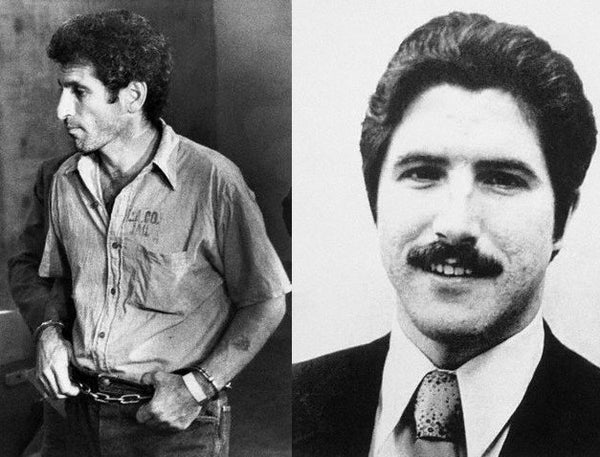
In 1977, the naked bodies of three strangled prostitutes were found on hillsides in the Los Angeles area. Over the following months, more victims were found, naked and strangled, sometimes sodomized. Instead of prostitutes, these were schoolgirls, waitresses, and actresses.
A nine-year-old boy found two bodies near Dodger Stadium. Another had Windex injected into her veins. The men were caught when police in Washington arrested Bianchi, where he had fled, and connected him to the Los Angeles area murders. Bianchi is serving a life sentence in the Washington State Penitentiary.
Buono served in Calipatria State Prison until his death from a heart attack in 2002.
6. Lawrence Bittaker and Roy Norris, “The Toolbox Killers.”
In June, 1979, Bittaker and Norris drove into the San Gabriel mountains in their silver cargo van, which they nicknamed “Murder Mac.” They found a barely visible fire road blocked by a padlocked gate.
They cut the lock and replaced it with one of their own. The next night, they snatched a sixteen-year-old girl as she left a church meeting, dragged her into Murder Mac, drove to the fire road, let themselves through the gate, and took turns raping her.
The pair murdered five teenage girls over several months in 1979. The name “Toolbox Killers” came from the tools used during the attacks. Trial evidence and Norris’s cooperation established the pattern without requiring a graphic replay of every injury.
They left victims in remote parts of the mountains. Norris pleaded guilty and received a sentence of 45 years to life. Bittaker went to trial, with Norris testifying for the prosecution, and received a death sentence. Bittaker died in prison in 2019. Norris remains imprisoned.
7. Richard Ramirez, “The Night Stalker.”
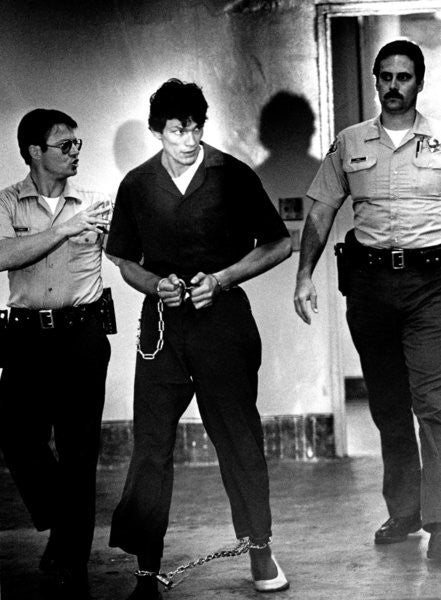
Ramirez slipped into a 79-year-old woman’s Los Angeles apartment in the wee hours of the night and stabbed her in her bed. Over the next fourteen months, he killed repeatedly, usually during the night while his victims slept, thus earning the nickname the Night Stalker.
He was convicted of 13 murders and five attempted murders. He was sentenced to die in the gas chamber, but he died of complications from lymphoma while he was still on Death Row.
In addition to these seven, honorable mention goes to Charles Manson, most notorious of all, but with a lower death toll than the ones above; Wayne Adam Ford, who walked into a police station with a victim’s severed breast in his pocket and confessed to four murders; and Richard Chase, “The Vampire of Sacramento,” who drank the blood of his victims. Never doubt the bizarreness of California serial killers. This gives you something to think about on your next vacation for horror lovers.
What these California cases have in common

A case-map illustration. The useful comparison is the record, not a recreated crime scene.
The seven entries cover different decades, locations, and investigative methods. They also show why a nickname is a poor substitute for a case file. “Freeway Killer” was used for Bonin, Kraft, and Patrick Kearney even though the men were not partners. “Hillside Strangler” became plural once investigators determined that Bianchi and Buono had acted together. News labels helped the public recognize a developing story, but they can blur separate prosecutions.
The cases also moved through the courts in different ways. Bonin was convicted in two counties and executed in 1996. Corona won a reversal of his first conviction, faced a second trial, and was convicted again. Ng fought extradition from Canada before his California trial. Norris accepted a plea and testified, while Bittaker went before a jury. Those paths matter when reading a quick list because an arrest, a confession, and a murder conviction are not interchangeable.
Investigative technology changed across the same span. Corona’s case began with graves found in orchards. Bonin was identified after a tip helped police focus on him. Kraft was stopped while driving with a victim in his car. The Ramirez investigation used a fingerprint entered into California’s developing automated identification system. Our longer account of how Richard Ramirez was identified and captured explains that last step in more detail.
One more caution: a death sentence does not mean that a person still sits in the same unit named in an old article. California began moving condemned prisoners out of San Quentin in 2024. Juan Corona and Lawrence Bittaker both died in 2019, and older web pages that call them current prisoners are stale. Randy Kraft remains under a death sentence, while Richard Ramirez died of lymphoma in 2013 before an execution date was carried out.
Readers who want to follow the legal sequence from arrest through sentencing can use our plain-language guide to the criminal justice process. It helps separate what investigators alleged, what prosecutors charged, and what a jury ultimately found.
How to read older California case accounts
Publication date matters. A newspaper story written during an arrest can accurately report what police knew that day and still be incomplete years later. A conviction may be reversed. A second trial may reach the same result for different reasons. A prisoner may die, be transferred, or receive a new hearing. When an old profile uses the present tense, check the date before treating it as a current status report.
Victim counts require the same care. This list uses the number tied to a conviction when that figure is available, then labels higher estimates as suspected or possible. That approach can feel less dramatic, but it keeps an unsolved case, a police theory, and a jury verdict in their proper lanes. It also keeps the focus on people whose deaths were actually part of the case record.
Sources
- California Department of Corrections and Rehabilitation capital punishment history
- Associated Press report on Randy Kraft’s 2025 case status
- FBI Law Enforcement Bulletin, March 1986
Up Next: The Ten Most Wanted Serial Killers





3 comments
Shauna A Sloan
Looking to see if any of these killers had anything to do with the unsolved homicide of my mother in San Bernardino CA. back in 1982
Darren Gresham
Duane Samples was a convicted serial killer who was later hired by the Department of Rehabilitation . He is one of several serial killer California State employee and a vocational rehabilitation supervisor . When he lived in Oregon, he sexually mutilated and killed several woman but was released on parolle because he claimed that he suffered from PTSD because he was a Vietnam vet. Most Vietnam vets are honorable brave men who suffered in silence but led honorable lives after coming home but Duane Edward Samples is a disgrace. It is important to note that there is a California policeofficer who is also named Duane Samples so don’t confuse them.
william phillips jr
did anyone start as pepping toms ?